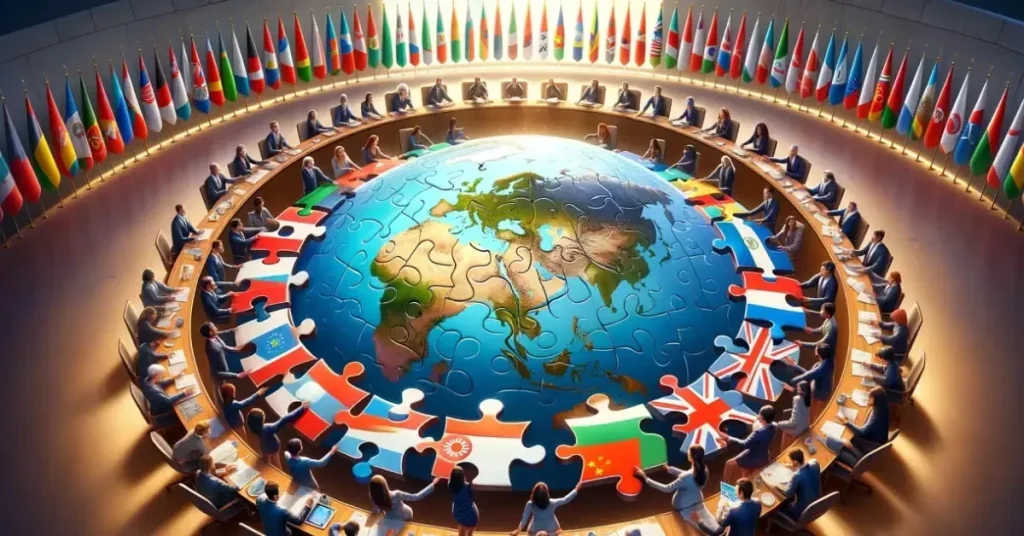
World Politics Explained offers a practical lens for understanding how power moves on the global stage, guiding readers through the tangled dance of power shifts and the rise or reconfiguration of global alliances that shape policy, markets, and the everyday decisions of households and firms, while grounding abstract theory in concrete examples drawn from trade disputes, climate diplomacy, security commitments, and the evolving language of legality that governs state behavior, so that a single headline can be unpacked into a sequence of causal steps linking domestic politics to international consequences, and the way development aid, trade diversity, and regional investments create feedback loops that reflect how power is distributed among states, firms, and non-state actors across multiple sectors.In a world where nations advance at different speeds, technology reshapes influence, and security guarantees are renegotiated in forums ranging from multilateral institutions to bilateral understandings, geopolitics acts as the operating system that connects macroeconomic trends to political calculations, military postures, energy strategies, and regional preferences, while also accounting for domestic audiences, public opinion, and the pressures of capital markets, and it considers how domestic politics, electoral cycles, media ecosystems, and interest groups interact with international bargaining to influence outcomes on treaties, sanctions, and security guarantees.