Business Continuity Planning is a strategic imperative in today’s volatile business environment, helping organizations prepare for and withstand unexpected disruptions. From cyber incidents to supply chain shocks, a well-designed program aligns people, processes, and technology to keep core services available. By outlining recovery objectives and prioritizing critical functions, including risk assessment, teams can reduce downtime and maintain trust with customers, partners, and employees. It also integrates recovery planning with broader resilience efforts to provide a clear path from disruption to rapid restoration. This guide highlights essential components, practical steps, and the benefits of adopting a proactive, risk-aware approach that protects people, preserves operations, and sustains customer trust across evolving threats.
Think of continuity management as a holistic approach to maintaining essential functions when surprises arise. Rather than a one-off check, resilience planning weaves risk evaluation, incident response, and crisis readiness into daily operations. By framing disruptions as opportunities to test processes, organizations strengthen operational resilience, safeguard stakeholder trust, and speed recovery across people, technology, and facilities. In practice, a robust continuity strategy maps out alternative workflows, communications protocols, and supplier contingencies so teams act quickly and decisively when events occur.
Business Continuity Planning: Foundations, Goals, and Value
Business Continuity Planning establishes a formal framework to anticipate disruptions, preserve critical operations, and minimize downtime during events such as cyber outages, supply shocks, or natural disasters. It aligns people, processes, and technology so that essential services can continue with limited interruption. By embedding governance, risk assessment input, and crisis management readiness into everyday operations, organizations reduce uncertainty and build stakeholder trust.
Within the continuity plan, recovery objectives like RTOs and RPOs translate risk insights into concrete targets. The plan also defines roles, communication protocols, and escalations so leadership and frontline teams respond with speed and clarity. When paired with disaster recovery planning for IT systems, the overall program becomes a comprehensive resilience strategy rather than a collection of isolated activities.
Risk Assessment as the Cornerstone of a Resilient Continuity Plan
Risk assessment is the compass for a resilient continuity plan. It identifies threats such as cyber intrusions, supplier failures, and physical hazards, estimates their likelihood, and evaluates potential impact on mission-critical operations. The output is a prioritized map of vulnerabilities that informs where to invest safeguards and redundancies.
By embedding risk assessment into governance and planning, organizations allocate resources where they matter most and set realistic recovery expectations. The findings feed the business impact analysis, inform testing scenarios, and guide updates to policy and technology configurations to reduce residual risk.
From BIA to Continuity Plan: Designing Recovery Strategies
From the business impact analysis to actionable recovery strategies, this phase translates risk exposure into operational choices. The BIA identifies which processes must run within specific timeframes and maps dependencies across people, facilities, IT, and suppliers. Those insights shape the continuity plan and set the foundation for effective response.
Recovery strategies build resilience through a mix of safeguards such as data backups, alternative sites, cloud recovery options, and manual workarounds. They must align with disaster recovery planning and the broader continuity plan so that IT restoration supports business continuity goals rather than creating silos.
Disaster Recovery Planning within the Business Continuity Framework
Disaster recovery planning within the business continuity framework focuses on IT and data restoration, recovery time objectives, and point-in-time recovery requirements. It ensures that technical capabilities and recovery procedures are ready to resume critical services after a disruption. DRP is a vital component, not a stand-alone project, when integrated with the broader continuity program.
To maximize resilience, disaster recovery planning should harmonize with incident response and crisis management, so leadership decisions and communications stay coordinated during a disruption. Regular alignment and joint exercises help ensure that technology recovery supports operational continuity and preserves customer confidence.
Crisis Management and Incident Response: Protecting Reputation During Disruptions
Crisis management and incident response activate when disruption affects public trust or stakeholder interests. Clear communication templates, escalation paths, and defined roles enable rapid, controlled actions under pressure. The goal is to protect reputation as operations recover.
Effective crisis management extends beyond IT and operations to include regulatory reporting, investor relations, and customer communications. By practicing coordinated responses and transparent updates, organizations minimize confusion and demonstrate leadership calm, which strengthens confidence during adversity.
Implementation, Testing, and Continuous Improvement of Your Continuity Plan
Implementation, testing, and continuous improvement turn plans into practice. Establish ownership, publish a formal continuity plan, and align it with governance policies to secure funding and accountability. Embedding risk-based thinking helps ensure that the program stays relevant as threats evolve.
Regular exercises, tabletop simulations, and full-scale drills reveal gaps and validate recoveries. Metrics such as recovery time, recovery point objectives achieved, and plan update rates guide ongoing enhancements to the business continuity plan and associated disaster recovery planning activities.
Frequently Asked Questions
How does a business continuity plan align with disaster recovery planning to minimize downtime during disruptions?
A business continuity plan (BCP) provides the overall framework to keep critical functions running, while disaster recovery planning focuses specifically on IT and data restoration. By aligning recovery objectives (RTOs and RPOs) identified in the business impact analysis (BIA), these efforts ensure clear steps, roles, and resources so disruptions result in minimal downtime and preserved customer trust. This integrated continuity plan guides cross-functional recovery and timely communications across the organization.
What role does risk assessment play in a Business Continuity Planning program?
Risk assessment identifies threats, their likelihood, and potential impact, informing contingency planning and investment decisions. When paired with the BIA, it helps prioritize recovery strategies and resource allocation, ensuring the business continuity plan addresses the most significant risks and maintains essential services under stress.
Why is crisis management important in the continuity plan and how should it be integrated?
Crisis management guides leadership decisions, stakeholder communications, and reputation management during disruptions. It complements operational recovery by providing escalation paths, clear communication templates, and coordination with external partners within the broader business continuity plan to protect trust and maintain visibility during a crisis.
What are the core components of a robust continuity plan within a Business Continuity Planning program?
Core components include governance and policy, Business Impact Analysis (BIA), risk assessment, recovery strategies (including disaster recovery planning), incident response and crisis management, playbooks and documentation, training and exercises, and monitoring for continuous improvement. Together, these elements form a living continuity plan that adapts to changing risks and regulatory requirements.
How can organizations test and exercise their business continuity plan to ensure readiness?
Regular drills—tabletop exercises, simulated incidents, and full-scale tests—reveal gaps and validate roles, procedures, and communications. Use varied scenarios to cover cyber incidents, physical disruptions, and supply-chain interruptions, then update the continuity plan accordingly to strengthen resilience.
How should governance, policy, and playbooks be structured in a continuity plan to drive accountability and rapid response?
Establish clear ownership, documented roles, and version-controlled playbooks that are accessible across the organization. Regular reviews ensure the continuity plan stays aligned with evolving conditions and regulatory requirements, while well-defined escalation paths and contact lists enable fast decision-making and coordinated action during a disruption.
| Aspect | Key Points Summary |
|---|---|
| Definition & Purpose | BCP is essential to anticipate, respond to, and recover from disruptions; enables survival, continuity of critical services, and long-term competitiveness. |
| Why it matters | Disruptions test all organizational layers; a strong plan aligns people, processes, and technology to maintain critical functions and build trust with customers, partners, and employees. |
| Core concepts | Involves risk assessment and a business impact analysis (BIA) to identify threats, consequences, and the most critical functions; guides investment in safeguards and alternatives. |
| Key components (high-level) | 1) Governance & policy. 2) BIA. 3) Risk assessment. 4) Recovery strategies & disaster recovery. 5) Incident response & crisis management. 6) Playbooks & documentation. 7) Training, testing & exercises. 8) Monitoring & continuous improvement. |
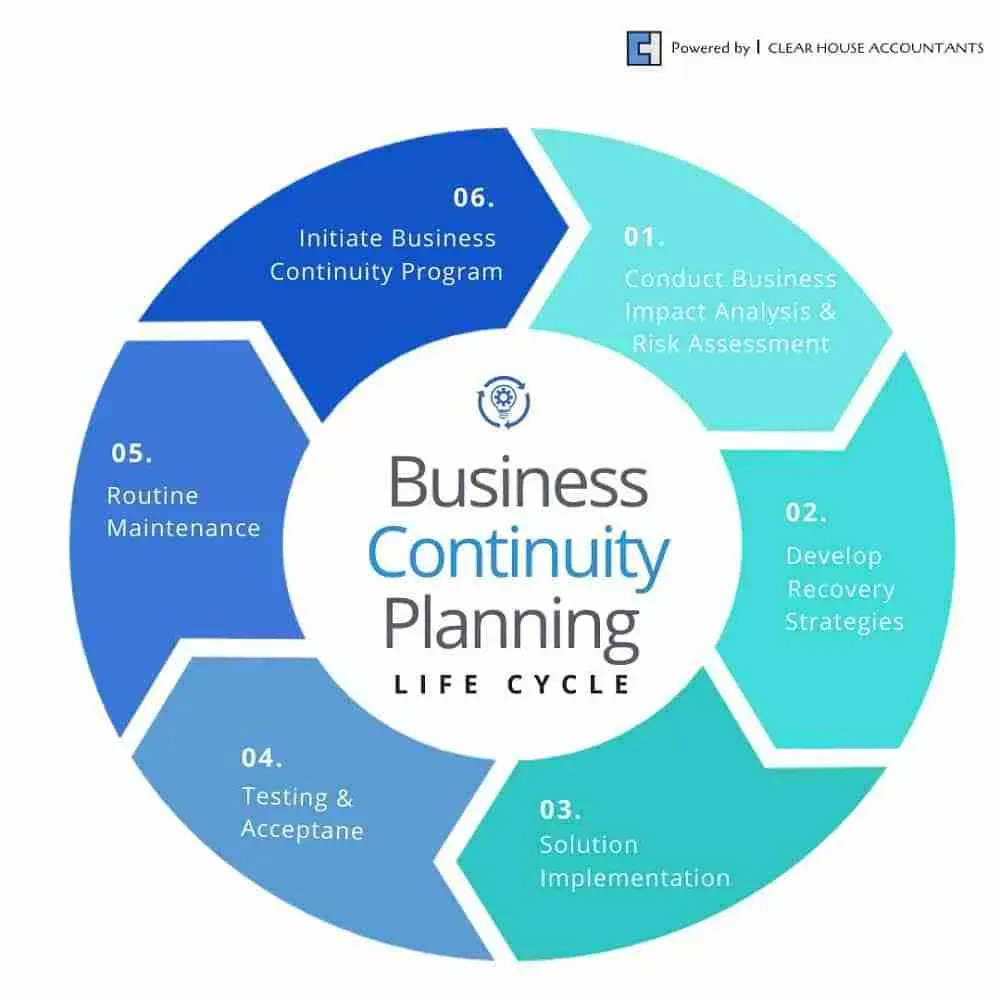
| Implementation steps | 1) Define ownership; 2) conduct BIA & risk assessment; 3) develop recovery strategies; 4) publish the continuity plan; 5) test, train, and drill; 6) review and improve. |
| Embedding, ROI, and resilience | Integrate BCP into daily operations, monitor ROI via reduced downtime and preserved revenue, learn from real events, and strengthen cross-functional resilience through regular exercises and updates. |
Summary
Conclusion: Business Continuity Planning is a vital discipline for any organization that aims to thrive amid uncertainty. By integrating governance, risk assessment, business impact analysis, disaster recovery planning, and crisis management into a cohesive program, you create resilience that protects people, preserves operations, and sustains customer trust. Start with a clear owner, a practical plan, and regular drills. Embrace a culture of continuous improvement, and your organization will not only survive disruptions but emerge stronger in the face of them.