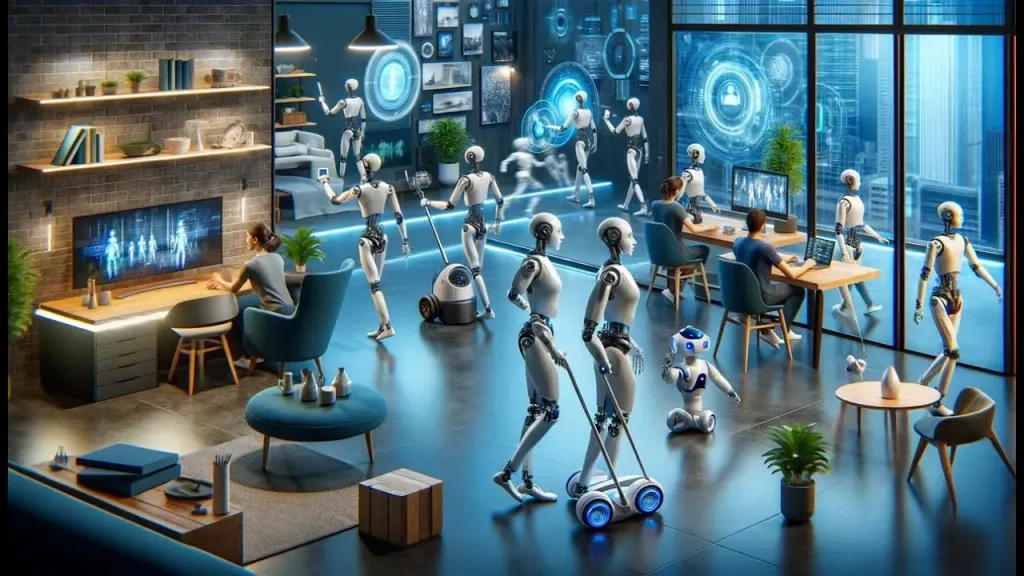
AI and robotics in everyday life are reshaping how we wake, work, and unwind, turning smart devices and responsive machines into trusted helpers. From predictive appliances to health wearables, these technologies blend data analytics with physical capabilities to simplify routines, reduce risks, and empower everyday decisions across home, work, and travel. This wave supports automation in daily life, delivering smarter energy use, proactive maintenance, and personalized services. Smart home ecosystems, autonomous transport, and robotic assistance in clinics illustrate practical benefits that matter to readers today, enabling safer homes, more efficient services, and measurable quality of life improvements. As adoption grows, people should understand opportunities, trade-offs, and governance to make the most of these advances while staying mindful of privacy, ethics, and the human skills that remain indispensable.
Viewed through the lens of intelligent automation in daily life, the trend blends software intelligence with physical agents to streamline chores, monitor systems, and assist people in real time. Smart devices, connected sensors, and autonomous helpers turn data into practical support across homes, workplaces, and public spaces, reinforcing a user-centric model of everyday technology. The discussion shifts toward safety, privacy, accountability, and accessible design, ensuring that progress serves a broad range of users rather than a narrow set of scenarios. In this context, emerging trends point to increasingly seamless human-robot collaboration, explainable AI, and resilient digital infrastructures that help automated systems feel trustworthy and easy to adopt.
AI and robotics in everyday life: defining the convergence and practical impact
AI and robotics are no longer isolated breakthroughs but a connected ecosystem that blends software intelligence with physical capability. This convergence turns everyday environments into adaptive, responsive spaces where machines learn from experience, anticipate needs, and act with increasing reliability. As future tech trends unfold, the line between consumer devices, workplaces, and public services blurs, creating holistic systems that enhance safety, efficiency, and convenience in daily activities.
The practical impact is evident in how we interact with technology day to day. From predictive coffee machines that adjust to your wake time to autonomous transportation that optimizes routes in real time, AI and robotics are changing routines in tangible ways. Yet this shift also raises questions about privacy, security, and the ethics of deploying intelligent machines in shared spaces, underscoring the need for thoughtful governance as AI and robotics become embedded in everyday life.
Smart home technology AI integration and daily life optimization
Smart homes demonstrate how AI integration across devices can coordinate lighting, climate, security, and entertainment to create a cohesive living environment. The design goal is to learn from routines and environmental cues, delivering comfort and energy efficiency with minimal user input. This is the essence of smart home technology AI integration, where disparate sensors and actuators act in concert to simplify daily decisions.
As automation extends into daily life, homeowners benefit from proactive maintenance alerts, personalized ambiance settings, and safer, more convenient living spaces. The ongoing integration also emphasizes data stewardship, offering opportunities to measure energy use, monitor performance, and tailor experiences while remaining mindful of privacy and data protection.
Robotics applications in daily life: healthcare, workplaces, and service sectors
Robotics applications in daily life span a broad spectrum from the factory floor to consumer-facing environments. In workplaces, cobots collaborate with humans to handle repetitive or hazardous tasks, improving throughput and safety while allowing workers to focus on higher-value activities. In retail and hospitality, robots assist with inventory management, cleaning, and guest service, elevating efficiency and the customer experience.
In healthcare and elder care, robotic systems support clinicians with precision, monitoring, and rehabilitation devices that expand patient autonomy. From robotic-assisted surgery to wearables that track vitals, these technologies translate AI-driven insights into tangible care improvements. Across all settings, robotics applications in daily life help organizations and individuals achieve better outcomes with safer, more reliable performance.
Transportation, mobility, and city ecosystems: autonomous systems and smart cities
The convergence of AI and robotics is redefining how people move and how cities manage infrastructure. Autonomous vehicles, buses, and last-mile delivery robots promise safer, faster, and more predictable transportation, with route optimization and real-time safety monitoring guiding decision-making. When integrated with sophisticated traffic systems, these autonomous assets can reduce congestion and lower emissions while enhancing urban mobility.
Smart city initiatives extend AI-enabled efficiency to utilities and public services. Robotic systems support infrastructure inspections, waste collection, and maintenance tasks, while AI analytics optimize energy and water management. The result is urban ecosystems that respond more effectively to resident needs, balance cost with safety, and support sustainable growth through data-informed governance.
Ethics, privacy, and workforce considerations in AI-driven automation
Adoption of AI and robotics brings a spectrum of ethical and societal questions. Privacy and data security are central concerns as devices collect behavioral and environmental information. Safety requires robust testing, transparent fault reporting, and standardized benchmarks to ensure dependable performance across diverse settings. Bias in AI algorithms, accountability for autonomous decisions, and the potential displacement of workers demand ongoing dialogue among policymakers, industry, and the public.
Workforce implications are complex and multifaceted. While AI and robotics can augment roles and create new opportunities, they can also shift job requirements and necessitate upskilling. Organizations and educators must collaborate on lifelong learning, reskilling pathways, and career transitions that prepare people for a more automated but also more capable economy, prioritizing human-robot collaboration that emphasizes safety, trust, and empathy.
Practical guidance for individuals and organizations adopting AI and robotics
A pragmatic approach to AI and robotics starts with high-impact, low-risk use cases that demonstrate value and build trust. Individuals can begin with familiar automation in daily life, such as smart devices and personal health monitoring, then gradually expand to more advanced robotics in controlled environments. For organizations, establishing a robust data strategy, cybersecurity posture, and interoperable platforms is essential to scale automation responsibly.
Key guidance focuses on evaluating total cost of ownership, measuring human-centric outcomes, and maintaining transparent communication about data usage and robotic actions. By setting clear standards, safety protocols, and performance metrics, organizations can realize consistent benefits while safeguarding privacy and ethics as AI and robotics become increasingly integrated into everyday life.
Frequently Asked Questions
What are practical examples of AI and robotics in everyday life, and how do they affect daily routines?
Practical examples include smart home assistants that learn your schedule and adjust lighting, autonomous cleaning robots, and wearable health sensors in daily life. In the workplace, cobots partner with humans to handle repetitive tasks and improve safety. Together, AI and robotics in everyday life sense, decide, and act, making routines more efficient and safer.
How does automation in daily life relate to AI and smart home technology AI integration?
Automation in daily life is powered by AI-enabled devices that learn user patterns and optimize energy, comfort, and security. Smart home technology AI integration coordinates lighting, climate, and entertainment across devices, often via centralized hubs or voice assistants.
What are robotics applications in daily life in workplaces and public spaces, and what benefits do they bring?
Robotics applications in daily life appear in warehouses with collaborative robots (cobots), service robots in retail and hospitality, and public safety or inspection tasks. They increase throughput, accuracy, and safety while enabling people to focus on higher-value activities.
How will future tech trends in AI and robotics in everyday life influence transportation, mobility, and city ecosystems?
Future tech trends include autonomous vehicles, delivery drones, and AI-managed smart city sensors. These advances can reduce congestion, improve safety, and optimize energy use, though governance and interoperability are essential.
What ethical, privacy, and workforce considerations accompany AI and robotics in everyday life?
Key concerns include data privacy, cybersecurity, bias in AI, accountability for autonomous decisions, and potential job displacement. Addressing these requires transparent governance, upskilling, and responsible deployment practices.
What practical steps can individuals and organizations take to adopt AI and robotics in everyday life responsibly and effectively?
Start small with high-impact, low-risk use cases and ensure interoperability across devices. For organizations, invest in cybersecurity, data governance, and staff reskilling; for individuals, build digital literacy and privacy awareness.
| Theme | Key Points | Notes / Examples |
|---|---|---|
| Introduction | AI and robotics are moving from experimental labs to daily life; the focus is practical, weaving into homes, workplaces, and public spaces; it discusses opportunities, challenges, and governance. | Frames AI and robotics in everyday life as a framework to understand what’s changing now and what could change next. |
| The AI & robotics landscape | Convergence of AI, robotics, and connected devices; AI powers sensing, pattern recognition, and recommendations; robotics translates insights into action; combined they learn, adapt, and operate with increasing autonomy. | End-to-end solutions that sense, decide, and act; reshapes product design, organizational operation, and daily interactions. |
| AI in home & health domains | Smart homes coordinate lighting, climate, security, and entertainment; wearable sensors and AI-enabled monitoring improve health outcomes; robotic assistance expands independence (elder care, mobility aids); AI-enabled telemedicine; robotic-assisted therapies. | Fall detection, exoskeletons for mobility, remote patient monitoring, and faster access to care; diagnostics and surgery support in clinical settings. |
| Robotics in workplaces & public services | Cobots collaborate with humans in manufacturing, logistics, retail, and hospitality; RPA handles back-office tasks; predictive maintenance enhances uptime and safety. | Increased throughput, reduced injuries, and improved service quality; AI analytics optimize robotic and human work. |
| Transportation, mobility & city ecosystems | Autonomous vehicles, buses, and last-mile delivery robots; real-time traffic management; drones; smart city operations for energy, water, and waste. | Safer, faster, and more reliable transport; better routing, lower emissions, and proactive city services. |
| Challenges, ethics & workforce considerations | Privacy and data security; safety; bias and accountability in AI; potential job displacement; need for reskilling; governance and policy discussions. | Focus on trustworthy AI, ethical deployment, and proactive workforce strategies to mitigate negative impacts. |
| Practical guidance for individuals & organizations | Gradual adoption; interoperability; governance frameworks; data strategy and cybersecurity; privacy protections and transparency; cost considerations and ROI; standards and metrics. | Start with high-impact, low-risk use cases; invest in interoperable platforms and clear governance to scale responsibly. |
| The future trajectory & preparation | AI and robotics becoming more embedded with smarter devices, capable cobots, and autonomous services; personalized experiences and broader accessibility. | Digital literacy, reskilling, and resilient IT architectures to support ongoing automation and human-robot collaboration. |
Summary
AI and robotics in everyday life are reshaping homes, workplaces, and cities with increased convenience, safety, and productivity. Intelligent software and robotic systems augment human capabilities, enabling smarter routines, safer operations, and more efficient services. However, responsible adoption requires attention to privacy, ethics, and workforce transitions. As devices and cobots become more capable and interconnected, individuals, organizations, and policymakers will need digital literacy, robust governance, and resilient IT architectures to maximize benefits while mitigating risks. The trend points toward deeper integration and more human‑centric design that enhances quality of life without compromising safety or values.