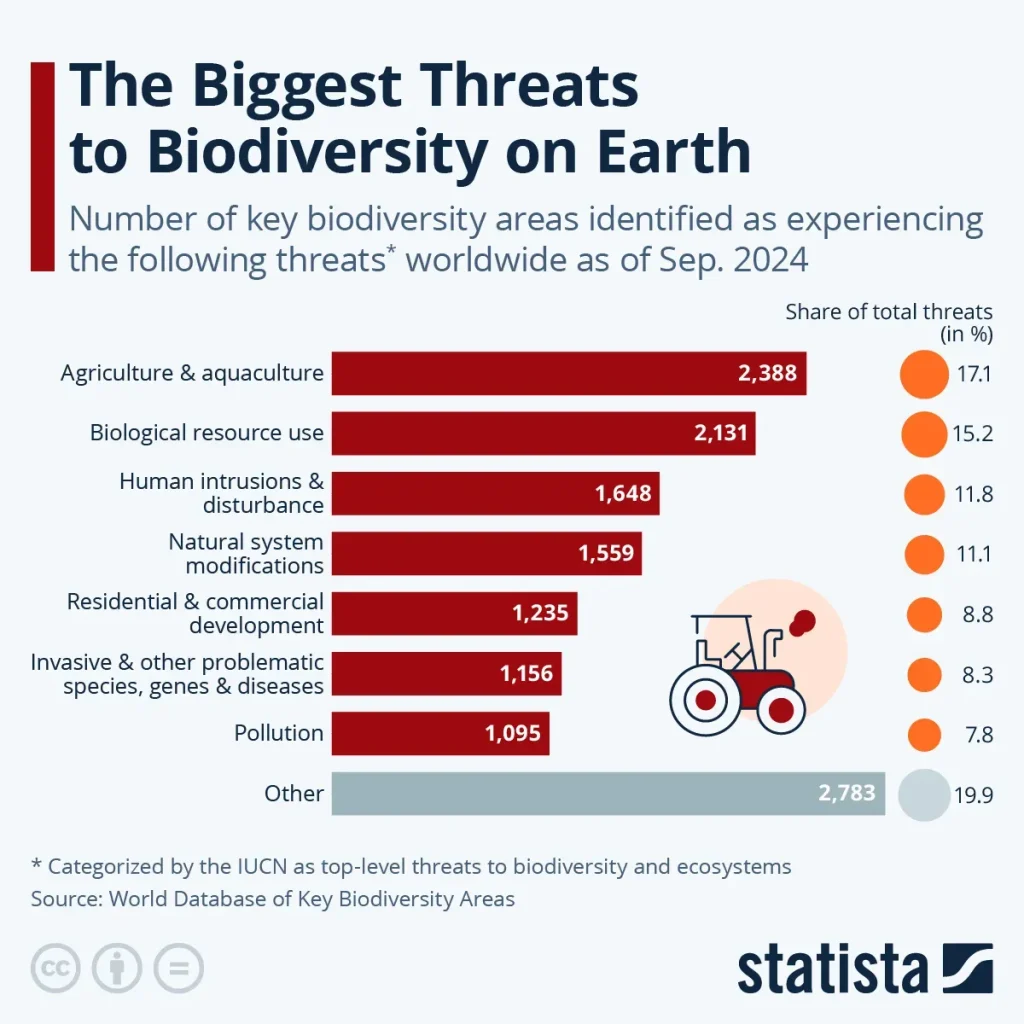
World Biodiversity Crisis is not a distant threat; it is unfolding across every continent and ocean, driven by a complex set of pressures—habitat destruction, overexploitation, invasive species, pollution, and, increasingly, climate change—that erode the fabric of life and the services ecosystems provide to people. This stark reality underscores the urgency of biodiversity conservation as a central pillar of sustainable development, shaping policies, investments, and everyday choices that affect food security, medicine, livelihoods, and the cultural knowledge communities rely on across regions, sectors, and generations. By prioritizing habitat restoration, landscape connectivity, and sustainable livelihoods, governments and communities can strengthen habitat resilience and help ecosystems absorb shocks, recover quickly, adapt to changing conditions, and continue to support pollination, water purification, flood protection, carbon storage, and climate regulation. Action at the policy, business, and local levels—such as expanding protected networks, reducing pollution, curbing illegal exploitation, reforming subsidies that incent habitat loss, and integrating biodiversity into urban and rural planning—creates the conditions for long-term ecosystem protection and sustainable development that benefits people and the planet. Readers can support conservation by choosing sustainable products, reducing pollution, backing protected-area networks, restoring degraded habitats, and engaging in citizen science that documents changes in biodiversity now and informs decisions for future generations.
Alternative framing and related terms help describe the same challenge from different angles: global biodiversity loss, ecological diversity decline, and the erosion of ecosystem services essential to human health and livelihoods. In policy discussions, this broader palette includes species richness gaps, habitat fragmentation, and the depletion of natural capital that underpins food security and climate resilience. Recognizing these related concepts helps planners craft integrated strategies that align conservation with development goals, Indigenous knowledge, and innovation in finance and governance. In short, the crisis is not only about wildlife; it is about the networks, processes, and services that sustain life on Earth and human well-being.
The World Biodiversity Crisis: Drivers, Context, and Urgency
The World Biodiversity Crisis is not a distant threat; it is unfolding across every continent and ocean, driven by habitat loss, overexploitation, invasive species, pollution, and climate change. This reality undermines the ecosystems that underpin food security, medicine, and cultural heritage, revealing how tightly human well‑being is linked to the diversity of life. By framing biodiversity loss through the lens of ecosystem services—such as clean water, pollination, climate regulation, and flood mitigation—we can see why biodiversity conservation and protecting ecosystems are essential components of sustainable development. Urgency arises because once species interactions unravel or genetic diversity declines, recovery becomes slower and more costly, even when habitat restoration begins.
Downstream effects cascade through ecological networks, affecting not only wildlife but the people who depend on healthy ecosystems for livelihoods and resilience. Habitat loss and fragmentation erode gene flow and population sizes, while pollution and invasives disrupt food webs and reproduction. Climate change impacts on biodiversity intensify these pressures by shifting habitats, altering phenology, and increasing extremes such as droughts and floods. Biodiversity conservation and ecosystem protection require integrated strategies that safeguard refugia, maintain core habitats, and support communities who rely on natural capital for daily life and long-term security.
Biodiversity Conservation in Practice: Protecting Ecosystems Across Scales
Biodiversity conservation in practice means translating knowledge into actions that protect ecosystems at multiple scales. Protected-area networks, ecological corridors, and restoration of degraded landscapes form foundational tools, while sustainable management of forests, fisheries, and farms maintains habitat integrity and connectivity. Recognizing Indigenous stewardship and local knowledge as essential partners strengthens ecosystem protection and improves outcomes for biodiversity conservation across landscapes and seascapes. When planning spans local communities to regional platforms, conservation aims become more resilient and better aligned with social needs and ecological realities.
Effective governance and steady funding enable on‑the‑ground results. International frameworks such as the Convention on Biological Diversity provide targets and accountability, but real progress happens through local decision‑making, co‑management with communities, and transparent biodiversity monitoring. When public policy aligns with community incentives—protecting pollinators, safeguarding water quality, and maintaining healthy habitats—biodiversity conservation becomes a shared investment that multiplies ecosystem benefits and reinforces sustainable development.
Strengthening Habitat Resilience Through Connected Ecosystems
Strengthening habitat resilience through connected ecosystems requires landscape design that allows species to move and adapt as conditions change. Ecological corridors, stepping‑stone habitats, and larger core areas create networks in which gene flow and ecological interactions persist, reducing extinction risk. Prioritizing habitat resilience also means safeguarding multiple habitat types and ecological niches within a given region so that services—from carbon storage to water purification—continue even when individual habitats face stress. This connectivity is central to sustaining both biodiversity conservation and ecosystem protection over time.
Real‑world examples highlight the power of connectivity: tropical forests linked by managed corridors, coastal mangroves and seagrass beds that buffer storms, and urban green spaces that sustain native biodiversity while contributing to climate adaptation. Restoration approaches that emphasize native species diversity, invasive‑species control, and structural heterogeneity tend to increase resilience and the capacity of ecosystems to withstand and recover from disturbances, benefiting both wildlife and human communities.
Climate Change Impacts on Biodiversity and Adaptive Conservation
Climate change impacts on biodiversity unfold through warming, altered precipitation, sea‑level rise, and more intense storms. Coral reefs bleach as ocean temperatures rise and chemistry shifts, mountain species compress into narrower elevational ranges, and phenological mismatches disrupt pollination and predator–prey dynamics. These shifts stress habitat suitability and can undermine ecosystem protection functions such as water purification and carbon storage, underscoring the need for climate‑adaptive approaches to biodiversity conservation.
Climate‑smart conservation integrates future climate projections into planning. Identifying climate refugia, expanding protected‑area networks, and prioritizing landscape connectivity help species track favorable conditions and maintain ecological processes. Cross‑sector collaboration with land‑use planning, water management, and fisheries is essential to sustaining habitat resilience and ensuring that ecosystem protection remains effective under changing conditions.
Ecosystem Protection as a Cornerstone of Sustainable Development
Ecosystem protection lies at the heart of sustainable development. Protected and restored ecosystems deliver services essential to livelihoods—pollination for crops, clean water, flood mitigation, and carbon storage that helps meet climate targets. When governments and businesses embed biodiversity conservation into planning and investment, habitat protection supports food security, health, and resilience to climate variability, creating mutually reinforcing benefits for people and ecosystems.
Policy coherence, adequate funding, and Indigenous rights‑based governance strengthen ecosystem protection outcomes. International and regional frameworks guide national strategies, while local stewardship and co‑management ensure that traditional knowledge informs practical conservation actions. In this integrated approach, protecting ecosystems becomes a shared responsibility that aligns biodiversity objectives with economic development and social well‑being.
From Policy to Practice: Implementing Biodiversity Conservation on the Ground
From policy to practice, translating science into action requires concrete interventions. Case studies in tropical forests, coastal mangroves, coral reefs, and freshwater systems show how biodiversity conservation can be achieved through a mix of protected areas, restoration, sustainable management, and community engagement. These experiences illustrate how protecting ecosystems across sectors safeguards habitat integrity and enhances resilience to climate impacts on biodiversity.
Implementation hinges on monitoring, adaptive management, and finance. Biodiversity risk assessments in supply chains, incentives for regenerative practices, and public‑private partnerships can fund long‑term protection and restoration. Community monitoring, citizen science, and transparent reporting help track progress toward biodiversity conservation goals, while policies empower local decision‑makers and encourage scalable, repeatable solutions.
Frequently Asked Questions
What is the World Biodiversity Crisis and how does biodiversity conservation help address it?
The World Biodiversity Crisis refers to rapid, global declines in species and ecosystems driven by habitat loss, pollution, overexploitation, invasive species, and climate change. Biodiversity conservation combines protecting ecosystems, restoring degraded habitats, and maintaining ecological processes to safeguard services such as water security, pollination, and climate regulation.
How do climate change impacts on biodiversity intensify the World Biodiversity Crisis?
Climate change impacts on biodiversity include warming, altered precipitation, and sea‑level rise that shift habitats and disrupt life cycles. These changes amplify the World Biodiversity Crisis by reducing species’ ability to adapt and weakening ecosystem resilience, underscoring the need for ecosystem protection and habitat resilience in conservation planning.
What core strategies support protecting ecosystems and reduce the World Biodiversity Crisis through habitat resilience?
Key strategies include protecting ecosystems through protected-area networks and ecological corridors, restoring degraded landscapes, and practicing sustainable management of forests, farms, and fisheries. These actions defend biodiversity conservation, strengthen habitat resilience, and support the services ecosystems provide, from clean water to pollination.
Why is habitat loss and fragmentation a driver of the World Biodiversity Crisis and how can connectivity improve ecosystem protection?
Habitat loss and fragmentation isolate populations, reduce gene flow, and make species more vulnerable to stochastic events, driving the World Biodiversity Crisis. Creating connectivity through corridors and broader landscape planning enhances ecosystem protection and habitat resilience by letting species move in response to climate shifts.
How can policy, funding, and community action advance biodiversity conservation to address the World Biodiversity Crisis and climate change impacts on biodiversity?
Policy coherence, adequate funding, and inclusive governance enable priority habitat protection, restoration, and sustainable resource use—critical levers against the World Biodiversity Crisis and climate change impacts on biodiversity. International frameworks like the CBD and local Indigenous stewardship help align biodiversity conservation with community needs and action.
What practical actions can individuals take to support protecting ecosystems and habitat resilience amid the World Biodiversity Crisis?
Individuals can reduce waste and plastics, choose sustainably sourced products, support conservation groups, participate in citizen science, and adopt biodiversity-friendly practices in gardens and farms. These everyday actions strengthen protecting ecosystems, habitat resilience, and overall ecosystem protection during the World Biodiversity Crisis.
| Aspect | Key Points | Implications / Why it matters |
|---|---|---|
| Drivers of the Crisis | Habitat loss and fragmentation; overexploitation; pollution; invasive species; direct exploitation | Loss of space and resources; disrupted interactions; reduced resilience of ecosystems and the services they provide |
| Climate Change Amplification | Warming, altered precipitation, stronger storms, sea-level rise; coral bleaching; range shifts; timing mismatches | Accelerates losses and reshapes ecological interactions, reducing species resilience and adaptive capacity |
| Ecosystem Services at Risk | Clean water, climate regulation, crop pollination, disease regulation, cultural and recreational goods | Threatens human well-being, livelihoods, food security, and cultural heritage tied to nature |
| Conservation Strategies | Protect intact habitats, restore degraded landscapes, sustainable resource management, create ecological corridors | Builds ecological resilience, maintains connectivity, reduces fragmentation, and supports species movement under climate change |
| Climate-Smart Conservation | Identify climate refugia, design resilient protected-area networks, apply ecosystem-based adaptation | Increases long-term viability of ecosystems and their services under changing conditions |
| Habitat Resilience | Maintain genetic diversity, protect keystone species, ensure habitat heterogeneity and multiple ecological niches | Enhances ability to absorb disturbances and recover, sustaining services like pollination and water regulation |
| Human Roles | Businesses, governments, civil society; sustainable purchasing, practices, and policy alignment | Critical for implementing actions at scale and aligning economic activity with biodiversity goals |
| Governance & Policy | CBD and regional frameworks; co-management; recognition of Indigenous land rights | Enables coordinated action, accountability, and integration of biodiversity into national planning |
| Case Studies & Action | Protected areas with community management; mangrove and seagrass protection; coral reef restoration; freshwater stewardship | Provide practical lessons and scalable approaches across biomes and governance contexts |
| Practical Action | Cross-sector collaboration; local plans; monitoring; conservation finance; engagement of the private sector | Supports scalable, integrated solutions and sustained commitment to biodiversity outcomes |
Summary
World Biodiversity Crisis is not a distant threat; it is unfolding across continents and oceans, driven by habitat destruction, overexploitation, pollution, invasive species, and climate change, with consequences for food security, medicines, and cultural heritage. Protecting ecosystems is essential for sustainable development. Effective responses require protecting intact habitats, restoring degraded landscapes, connecting ecosystems with corridors, and integrating climate-smart strategies, governance, and community engagement. By valuing biodiversity in policy and daily decisions, we can slow loss, strengthen resilience, and safeguard the services that ecosystems provide for people and the planet.