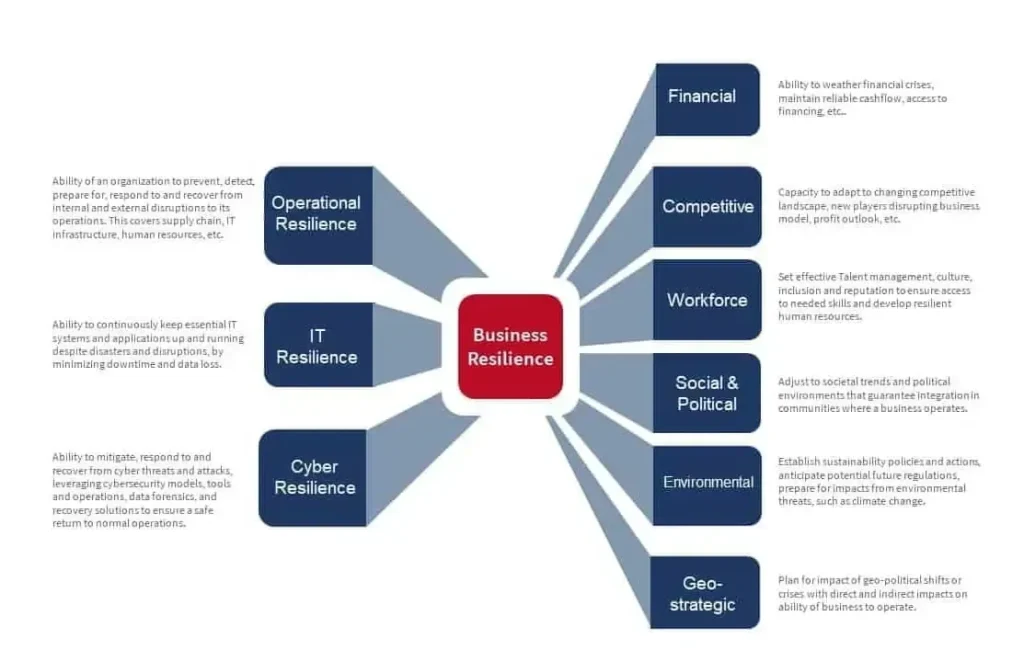
Business resilience is a strategic capacity that helps organizations anticipate, withstand, adapt to, and recover from disruption. In a world where cyber threats, supply shocks, and market shifts are everyday realities, it becomes a practical blend of people, processes, and technology. Effective business resilience relies on crisis planning, contingency planning, and a living set of crisis response playbooks that guide action when speed matters. By embedding risk management into daily operations, this approach to Business resilience becomes a living capability that guides decision-making during disruption. The goal is not to prevent every risk, but to shorten recovery times and protect customers, reputation, and value through robust business continuity practices.
From a broader perspective, this same discipline is described as organizational resilience, operational continuity, or disruption readiness. Taken together, these terms signal the importance of governance, planning, and the sustained alignment of people, processes, and technology. By emphasizing continuity of core functions and rapid decision-making, teams can translate strategy into practical steps during interruptions. Using related concepts like risk mitigation, incident response, and recovery planning helps connect the broader idea of resilience to everyday operations.
Business Resilience: Foundations, Crisis Planning, and Contingency Playbooks
Business resilience is not a one-off project or buzzword; it is an enduring capability that enables organizations to anticipate disruptions, withstand shocks, adapt to changing conditions, and recover quickly. It requires weaving people, processes, and technology into daily practice so crises become opportunities to learn and improve. At the core are crisis planning and contingency playbooks, practical tools that translate risk awareness into concrete actions when it matters most.
Foundations of resilience start with a comprehensive risk assessment and a robust business impact analysis (BIA) that identifies critical functions, dependencies, and potential failure points. From this view, leadership can map a resilience portfolio that links threats to impacts, assigns owners, and sets timelines for improvement. The goal is not to eliminate all risk, but to reduce exposure to unacceptable risk and to enable rapid recovery, with risk management embedded in the organization’s daily rhythm rather than treated as an annual exercise.
Crisis Planning: Preparing for the Unpredictable
Crisis planning is the proactive discipline of preparing for events that could disrupt operations, reputation, or compliance. It defines who makes decisions, how information flows, and what steps are taken in the first hours of an incident.
A well-constructed crisis plan rests on four pillars: governance, incident command, communications, and continuity. Governance establishes the authority to activate the plan; incident command provides a structured approach to coordinating response; communications ensure timely, accurate, and consistent messaging to employees, customers, partners, regulators, and the media; and continuity ensures critical activities keep running or resume quickly.
Contingency Planning: Building Actionable Playbooks
Contingency planning translates risk awareness into concrete, executable actions. It complements crisis planning by outlining step-by-step playbooks that teams can follow when a disruption occurs. A good contingency plan includes clearly defined triggers, activation criteria, owner roles, and time-bound actions that align with the organization’s risk tolerance and recovery objectives.
Playbooks are living documents tailored to the organization’s realities. They describe who activates the plan, which systems to check first, how to communicate with stakeholders, and what the short-term and long-term recovery milestones look like. A strong contingency playbook also incorporates a framework for decision-making under ambiguity, helping leaders avoid paralysis and move decisively. In practice, contingency planning often references crisis response playbooks for specific scenarios such as IT outages, supplier disruptions, or workforce interruptions.
Aligning Crisis Response with Business Continuity and Disaster Recovery
Crisis plans and contingency playbooks gain power when aligned with business continuity (BC) and disaster recovery (DR) strategies. BC focuses on maintaining essential functions during disruptions, while DR concentrates on restoring IT systems and data after an incident. When integrated, these resilience disciplines provide a holistic view that spans people, processes, and technology.
Adopting internationally recognized standards such as ISO 22301 helps structure risk assessment, business impact analysis, and the design of resilient controls that can be tested and refined over time. Aligning with such standards improves auditability, compliance, and reinforces a culture that prioritizes continuity as a core organizational capability alongside ongoing risk management.
Elements of Effective Crisis Response Playbooks
A crisis response playbook is the practical embodiment of an organization’s resilience ambitions. It translates strategic intent into actionable steps that teams can execute under stress and typically includes activation criteria and authority, an incident command structure, stakeholder communications plans, operational playbooks for critical functions, recovery milestones, and a process for learning and improvement.
Because playbooks are living documents, they require cross-functional collaboration and regular updates to reflect changes in the business and its risk landscape. A robust testing regime, debriefs after exercises, and clear metrics ensure these playbooks guide rapid decision‑making, keep customers informed, and shorten recovery time objectives.
People, Communication, and Technology: A Holistic Resilience Model
People are the most critical component of any resilience program. A culture of proactive risk awareness, clear communication, and collaborative problem-solving underpins effective response. Training that simulates crisis scenarios helps employees internalize their roles and reduce response time, while leaders modeling calm and psychological safety encourages reporting and rapid collaboration.
During a crisis, information quality and speed can determine outcomes as much as technology alone. Clear crisis communications plans—addressing customers, regulators, and the public—maintain trust even as the situation evolves. Technology underpins resilience by enabling rapid detection, response, and recovery through cloud resilience, redundant data centers, and robust backup strategies, all while being integrated with governance and continuous improvement.
Frequently Asked Questions
What is business resilience, and why is crisis planning a core component?
Business resilience is the organization’s enduring capability to anticipate, withstand, adapt to, and recover from disruptions. Crisis planning anchors this by defining governance, incident command, communications, and continuity actions, turning risk insights into timely responses and aligning with business continuity and risk management.
How does contingency planning support business continuity during disruptions within a resilience framework?
Contingency planning converts risk awareness into actionable playbooks with clear triggers, activation roles, and time-bound actions. It complements crisis planning by guiding rapid response and ensuring recovery objectives tied to business continuity.
Why is risk management essential to building robust business resilience?
Risk management identifies threats, estimates impacts, and prioritizes controls, forming the backbone of a resilient portfolio. Integrated with BIA and recovery objectives, it supports ongoing business continuity and governance.
What are crisis response playbooks, and how do they enhance crisis planning and decision-making?
Crisis response playbooks are living, action-oriented guides that specify activation criteria, incident command structures, stakeholder communications, and recovery milestones. They operationalize crisis planning and contingency playbooks, helping teams act decisively under pressure.
How can organizations integrate people, processes, and technology to strengthen business resilience, including crisis planning and playbooks?
Organizations strengthen business resilience by aligning people, processes, and technology—through clear roles, standardized procedures, and resilient IT and data practices. Regular drills, monitoring, and learning loops ensure crisis planning and playbooks stay effective as risks evolve.
How do crisis planning and contingency playbooks relate to disaster recovery and ISO 22301 within a business resilience program?
Crisis planning and contingency playbooks reinforce disaster recovery and business continuity, and together with standards such as ISO 22301 provide a structured, auditable approach to resilience. This integration supports governance, compliance, and continuous improvement.
| Topic/Aspect | Key Points |
|---|---|
| Foundation (Foundations of Business Resilience) | Risk assessment and robust Business Impact Analysis (BIA) identify critical functions, dependencies, and failure points; define a prioritized resilience portfolio; owners and timelines; integrate risk management into daily operations. |
| Crisis Planning | Prepare for disruptions with governance, incident command, communications, and continuity; establish escalation paths, templates, and decision rights. |
| Contingency Planning | Create tailored playbooks with triggers, activation criteria, owner roles, and time‑bound actions aligned to risk tolerance and recovery objectives. |
| Bringing It Together (BC & DR) | Crisis planning and contingency playbooks sit at the intersection of business continuity (BC) and disaster recovery (DR); ISO 22301 provides a structured approach for risk assessment, BIA, and resilient controls. |
| Crisis Response Playbooks | Activation criteria, incident command structure, stakeholder communications, operational playbooks, recovery criteria, and documentation/learning to drive decisive action. |
| Practical Steps to Build Resilience | Eight-step guide: map critical functions; stress test scenarios; develop crisis playbooks; integrate people/process/technology; establish governance; monitor/alert/analytics; run exercises; measure/refine. |
| People & Culture | People are central; training, proactive risk awareness, clear communication, leadership calm, psychological safety, and cross‑functional collaboration. |
| Communication | Clear, timely, and proactive crisis communications; stakeholder messaging, transparency, and trust maintenance during incidents. |
| Technology as Enabler | Technology supports detection, response, and recovery (cloud, redundant data centers, backups), but governance and playbooks are essential for effectiveness. |
| Case Examples | Real‑world lessons from supplier disruptions and cyber incidents illustrate activating playbooks, updating risk controls, and improving third‑party risk management. |
Summary
Conclusion: